


Podcast: Grant Woods, Guest of Antler & Feather
Grant was a recent guest on the Antler & Feather podcast. We cover the basics of scrapes, rubs, and how you can utilize them as a hunter. We discuss when and how to integrate grunting and rattling into your game plan. We dive into the optimal conditions (weather, pressure, thermals, and how they affect scent control) to look out for when you are deciding when to go hunt, as well as why I never hunt based on moon phase.
How to Conceal a Food Plot From Neighbors
Last spring, Daniel toured and designed a habitat and hunting improvement plan in Tennessee. There was an old pasture along the property line that would be easy to convert to a food plot.
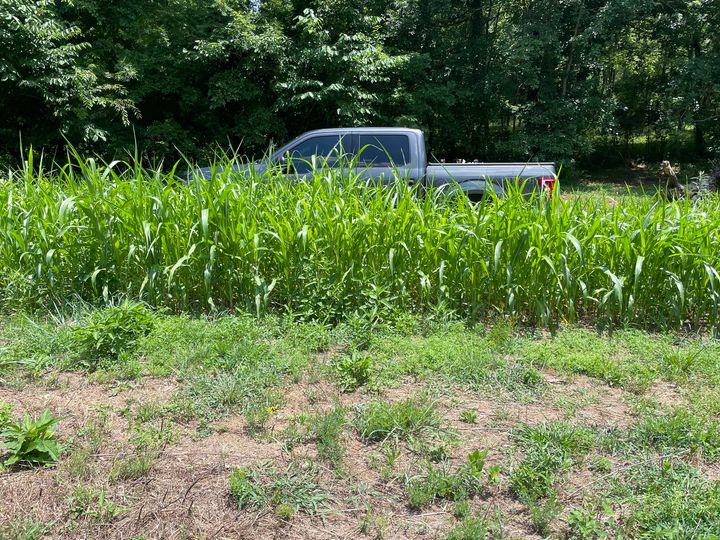
Daniel recommended planting Green Cover Seed's “View Blocker” as a visual screen along the edge of the property to conceal the plot from neighbors during fall. As you can see from the above picture, even during the current summer drought, the screen is growing great and will be well above a pickup truck come fall! Visual screens can be great tools for landowners/hunters along property lines.
Another option we often suggest is to create bedding areas next to roads. The thick, gnarly vegetation not only serves as visual screen, but also as a barrier for folks to walk through. Deer bed by a road and then move into the center of the property to feed. This option is only good if the native vegetation will grow tall enough AND remain standing throughout the winter. Often grasses will lay down during the late season and hardwood trees loose their leaves so it no longer has the ability to screen the food plot from the neighbors or those driving by.
Planting pines may be an option. If there’s a market in the area pines should be considered an investment as they can be harvested and sold in 15 + years!
Enjoy creation!
The GrowingDeer team
Why We Prefer Food Plot Blends In Warm and Cool Season Food Plots
Several weeks ago, deer were browsing the tender buckwheat forage in the Green Cover Seed Summer Release. Ward Laboratories, Inc. tested the buckwheat and found it contained over 25% protein! The buckwheat that was not consumed has flowered and is now producing seed. At this stage, it’s not as palatable to deer. Not to worry! There are other species in the Summer Release that are now providing high quality forage.
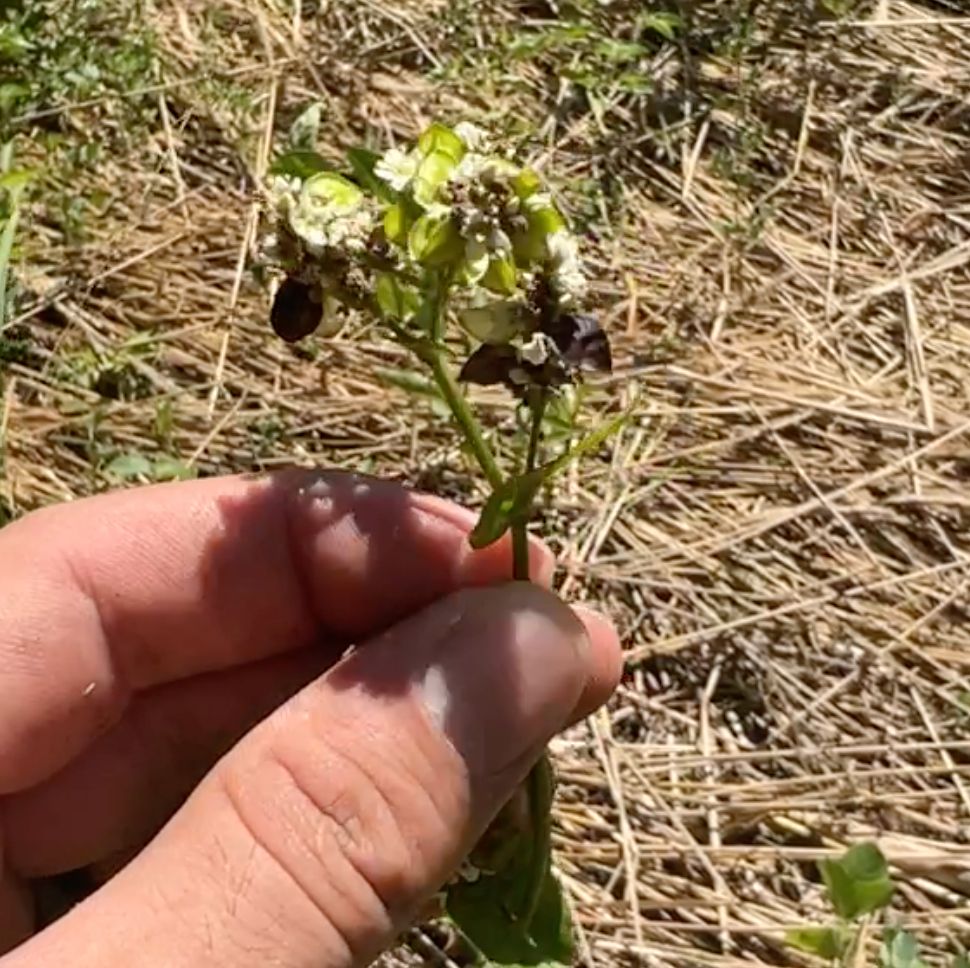
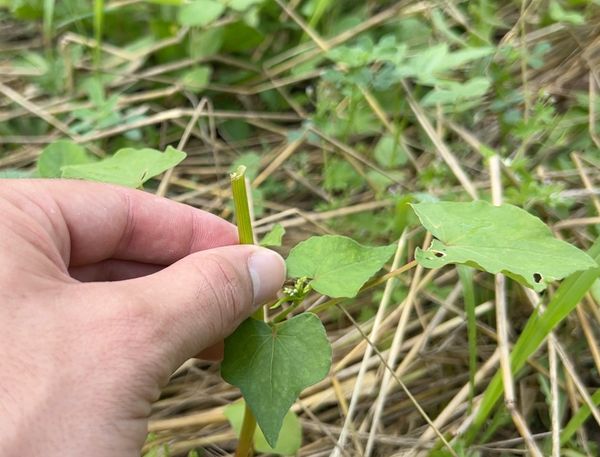
This is one reason we prefer blends of multiple species in both warm and cool season food plots. Each species is palatable and matures at a different time. Blends maximize the forage potential of each plot creating a buffet for deer and other critters! over 25% protein! The buckwheat that was not consumed has flowered and is now producing seed. At this stage, it’s not as palatable to deer. Not to worry! There are other species in the Summer Release that are now providing high quality forage. This is one reason we prefer blends of multiple species in both warm and cool season food plots. Each species is palatable and matures at a different time. Blends maximize the forage potential of each plot creating a buffet for deer and other critters!
Why Mulching Doesn’t Create Good Deer Habitat
While working in South Carolina, Grant found this area where forestry mulching was used. As you can see in this video, the mulch did not kill the hardwoods. Mulching makes it look good for a year or two but stumps will sprout creating unproductive whitetail habitat. See more information in this short video on where you could use mulching and where/why not to mulch for longterm productive whitetail habitat improvements.
Now That’s a Pinch Point!
Daniel was recently assisting a landowner in Georgia when they found a heavy deer trail. Deer were traveling past the end of an old fence and actually walking into the creek to go around rather than jumping. These types of bottlenecks can be great hunting (and trapping) locations if a hunter can approach and hunt the location without alerting deer.
Bucks! Bachelor Groups in May
Yesterday afternoon, the rain passed and we spotted a bachelor group of bucks browsing native vegetation! Not only are the native species providing high quality browse but also cover. These bucks seem secure and calm!
Summer is a great time to observe bucks in bachelor groups. Bucks will be feeding in food plots and areas of native vegetation. Grab your Burris binoculars and check out the bucks as the velvet comes on – it's a great way to enjoy creation!
Broadcasting Seed Into Small “Hidey Hole” Food Plots
Braden and Josh helped broadcast several hidey hole food plots yesterday before the rain. They broadcasted Green Cover Seed Browse Pressure Release at twice the drilling rate. This higher rate ensures a good stand!
We often broadcast seed into standing vegetation but spread at least twice the seed as normal and then realize there may not be a great stand. For good success the seed needs to make seed to soil contact. There will be a low survival rate if the seeds land on vegetation, etc., rather than directly on soil. It’s best to broadcast the seed just before or during a rain! This will help by splashing dirt and covering the seed and insuring there’s adequate soil moisture.
Sometimes we create a firebreak around the plot and burn the existing vegetation when it’s dry/dead and then broadcast the seed. This is a good technique that still increases the amount of organic matter as it doesn’t harm the roots, but does create a clean seed bed and often a very good stand of forage! This technique was used successfully by Danny and Bradley in this video.
For more in-depth tips on how to use hand tools or a broadcast spreader to create a small food plot, check out this video.