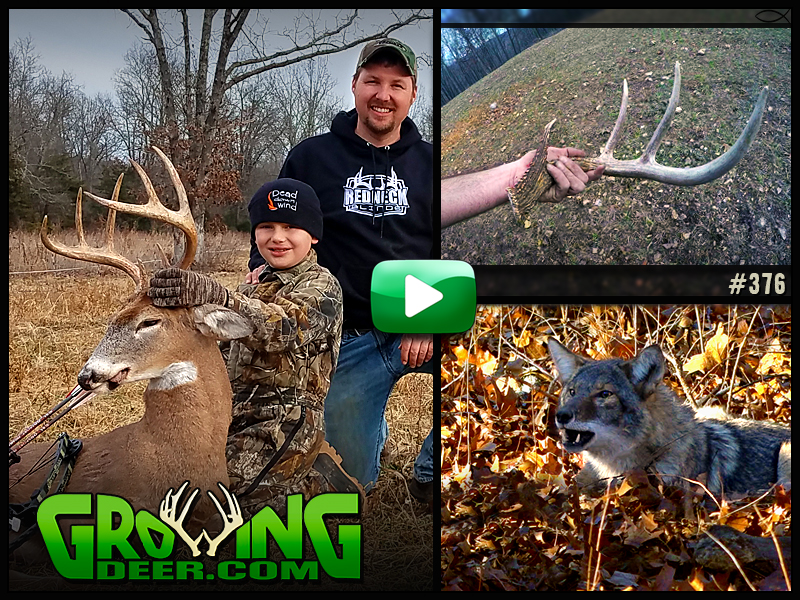
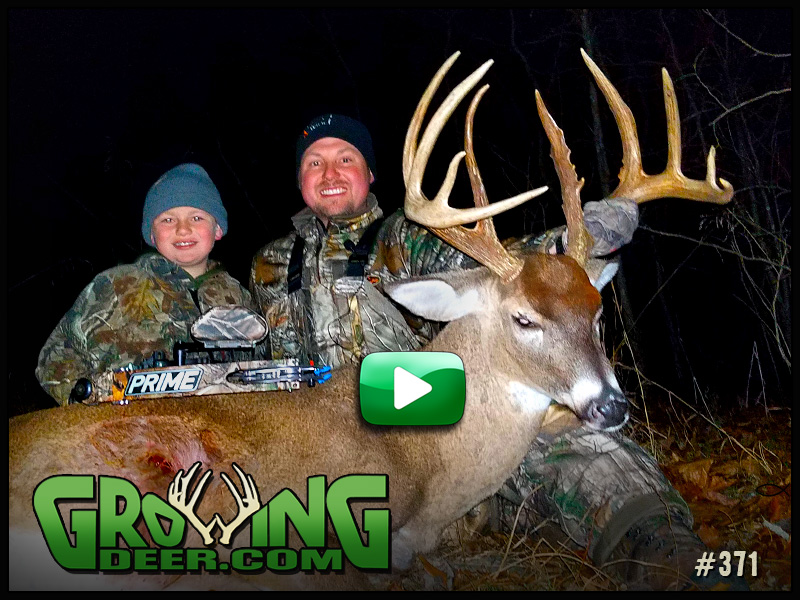
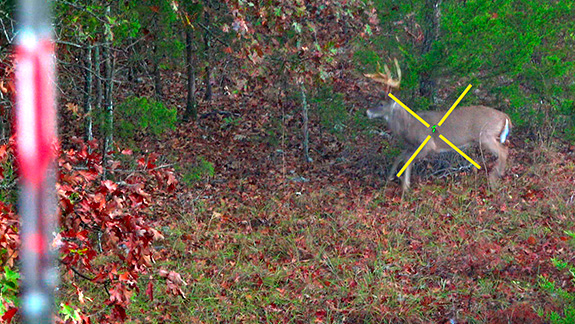
Watch Seth and Trace Harker successfully hunt late season food sources! Both Harkers get a bad case of buck fever but each finds the remedy. Plus, there’s a trap line double at The Proving Grounds!
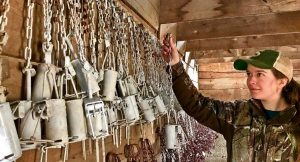
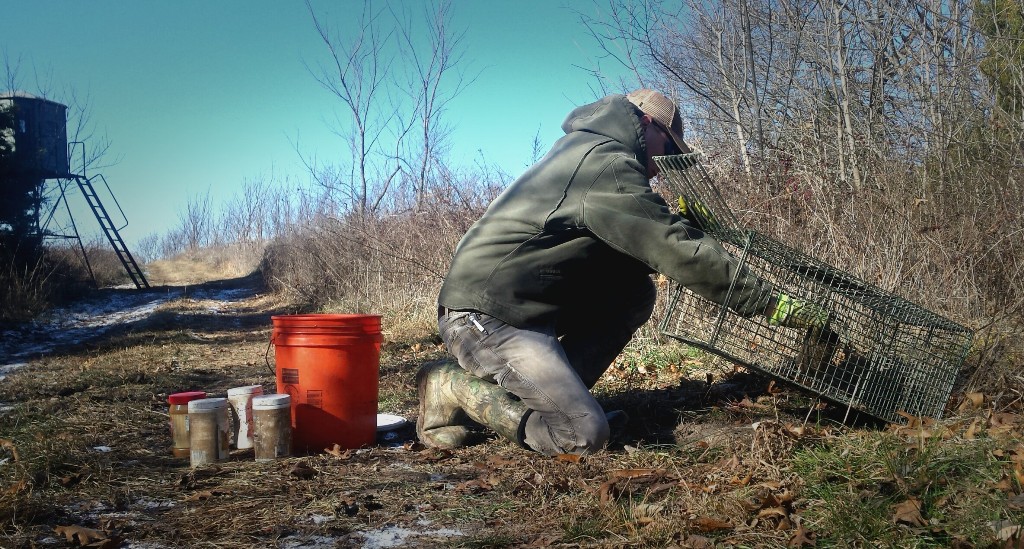
Tuesday marked the end of a successful trapping season at The Proving Grounds. We’re excited to have removed 41 predators from the property by trapping daily and using a variety of baits to bring them into our Duke traps. That means most likely more turkey poults, quail chicks, and fawns will survive!
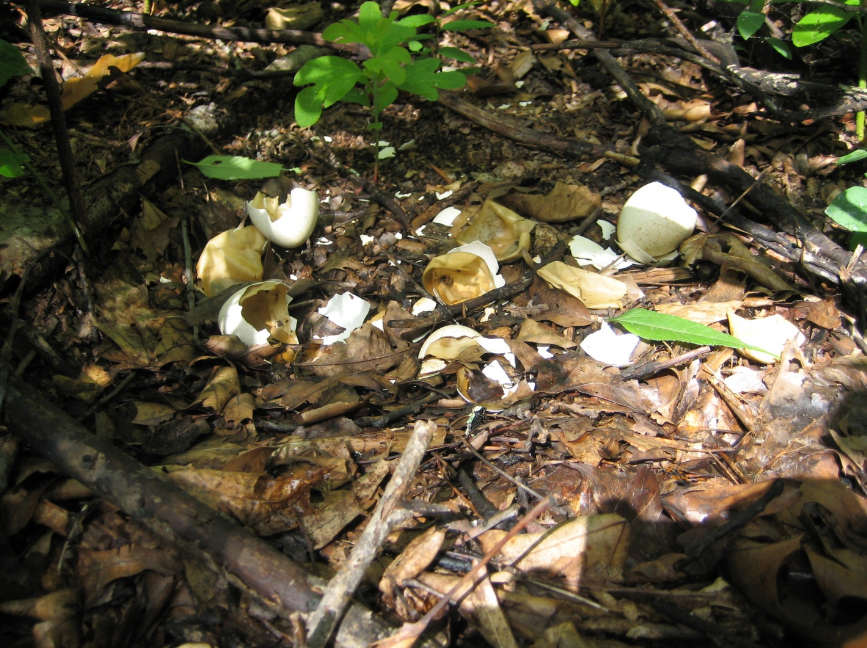
Nest predators can cause serious damage to a turkey population.
The GrowingDeer Team has been trapping predators consistently for seven years in an effort to balance the predator and prey population. We’re serious about trapping because studies show that racoons, opossums, and skunks are intense nest predators. Turkeys are especially susceptible to predation because they nest on the ground for approximately 28 days and then roost on the ground for approximately two weeks until the poults can fly.
It almost always rains at least once during the nesting season and wet hens have an odor even humans can easily smell. This makes it very easy for predators to find turkey nests and consume all the eggs and even kill the hen at times. Researchers used to call this the wet hen theory but it’s not just theory.
Last year The Proving Grounds had a high turkey poult survival rate compared to the statewide average. This was in part because of the serious effort the team has put into trapping. As land managers and hunters, we want a healthy turkey population! By trapping predators, we are one step closer to a successful turkey season.
It’s no secret that tick populations are high in the Ozark Mountains. These abundant parasites can carry STARI, Lyme disease, Rocky Mountain spotted fever, and a variety of other diseases that are harmful to humans and wildlife. If you can remove an imbedded tick before it’s been on you for 24 hours, you should be fine. But unlike us, a deer can’t remove many of the ticks on their body. In the past we’ve hoped to reduce the amount of ticks through burning. While prescribed burns are an important habitat management tool, they did not noticeably reduce the ticks in burnt areas. We suspect this is because most of our prescribed fires are 50 acres in size or less. When new vegetation flushes it’s very attractive to deer and ticks from these deer rapidly repopulate the area.
Because of this, the GrowingDeer Team is starting a new experiment to see if we can reduce the number of ticks on deer (and us) at The Proving Grounds.
Recently, one of our clients had tremendous success with a feed called Antler-X-Treme. It has a proprietary mix of garlic and other natural ingredients that have been shown to keep ticks from staying imbedded in a deer. If this product works as well on The Proving Grounds as it did for our client, we could see higher fawn survival and up to a 15% increase in antler size!
Tyler, the other spring intern, and I have started feeding Antler-X-Treme at nine locations and we’re excited to see if the deer have fewer ticks compared to previous years (based on trail camera images, etc.). The project is off to a great start as deer started consuming the feed the first night it was available! I’m looking forward to sharing our results with you.
Deer may respond differently to food plots from season to season.
Deer season is over and it’s time to pause and reflect on last year’s highs and lows. Whether you had a great season or things didn’t go exactly as planned, your management practices strongly influenced the outcome of your hunts. It’s important to remember that what works on one property may not work on another. Regardless of where you hunt, you should focus on getting deer the nutrients that they need to grow healthy and strong. You can create the opportunity for a memorable hunting season next fall by maintaining great food plots during the coming year.
We’ve talked to several people who experimented with a new food plot last year and were disappointed with the results. If they planted a quality forage variety Grant’s advice to them was to persevere and let the deer learn to eat at the plot. Depending on your region, deer may never have encountered what you planted. Given enough time, one curious deer will start to nibble on the forage and the rest will follow suit. Forage grown but not consumed isn’t wasted! It will decompose and increase the organic matter which is critical for quality soils!
Poor soil quality can make any forage taste bitter. Building a good layer of soil over time can do wonders for food plots. It’s important to pay attention to how deer responded to your plots last season, but if you tried something new and it didn’t work out, it may be worth the time to try that forage variety again.
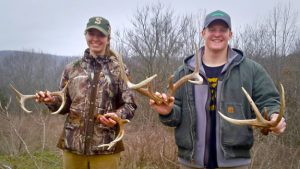
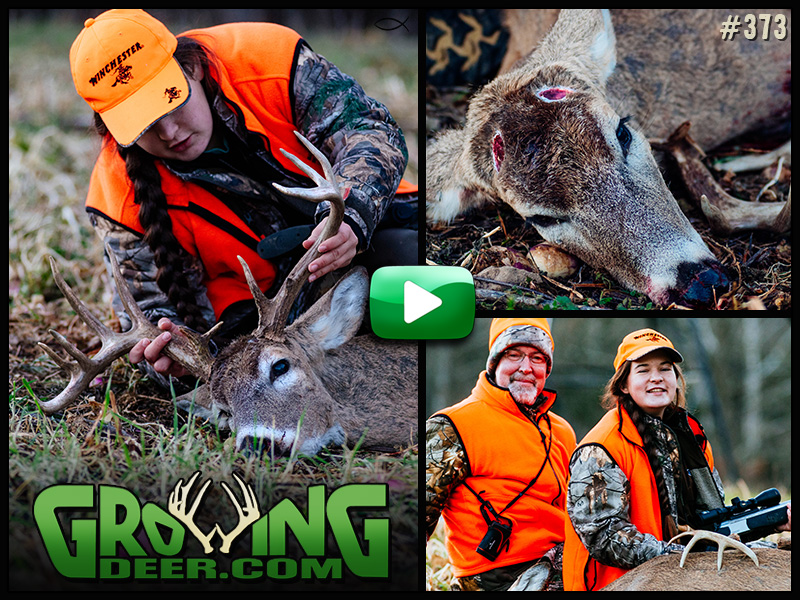
Rae Woods has had a long and testing season hunting whitetails. Watch this video to see the surprising end to her season with a now you see them, now you don’t set of antlers!
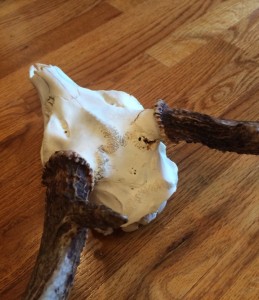
As you hit the woods in search of shed antlers this winter be sure to look for any signs of a brain abscess. A buck with a brain abscess can shed portions of their skull when antlers are cast. Read more here to understand brain abscesses: https://www.growingdeer.tv/view/2016/01/29/understanding-brain-abscesses/
For many hunters, the best hunting memories are made with family in the stand. Watch the hunts in this video where fathers and sons make memories while making the shot!
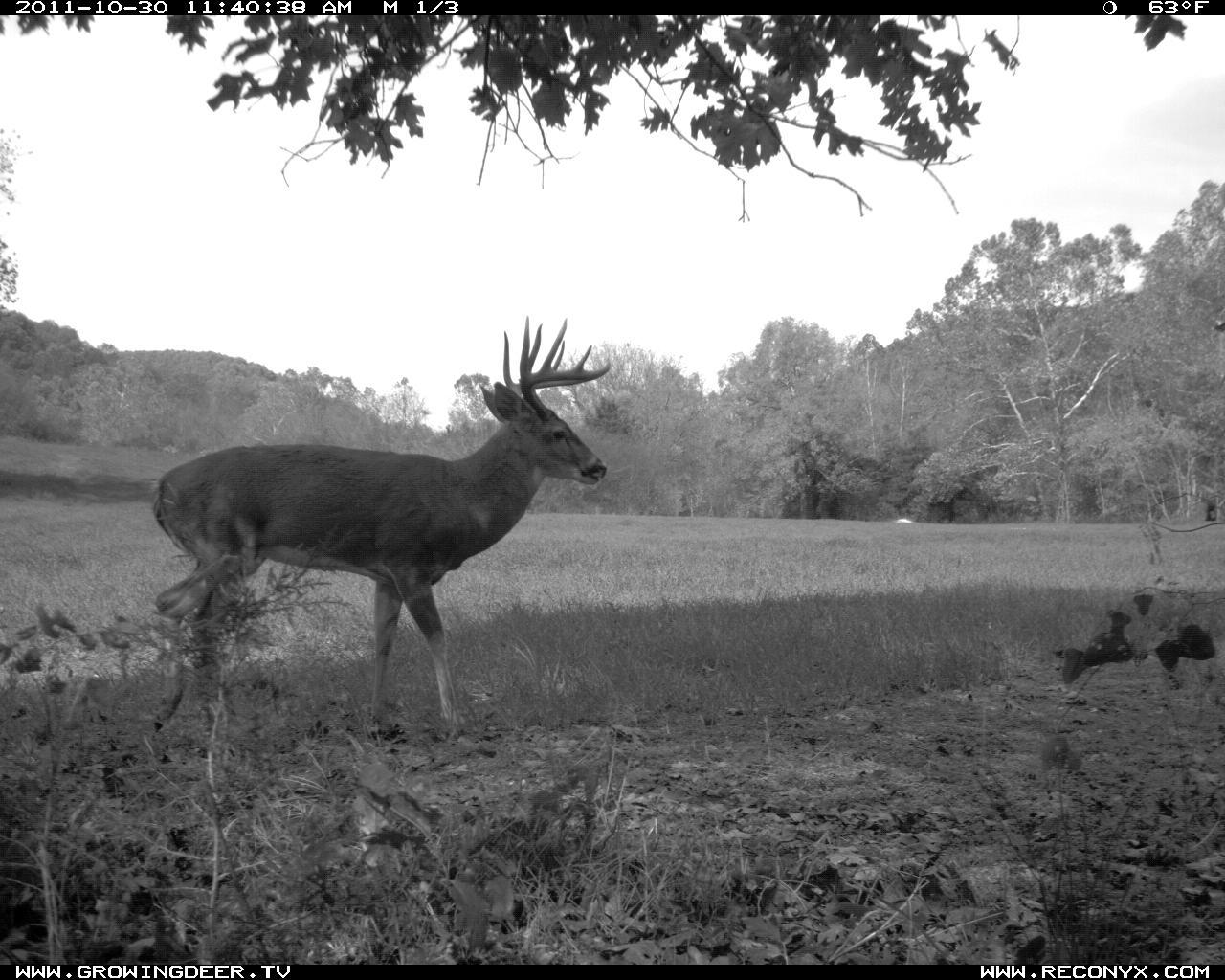
Use your trail cameras year round! Study the behavior and patterns of the bucks – don’t simply count points and estimate their age. By studying their behavior, you can focus your hunting time on bucks that tend to be more active during daylight hours and increase the odds of tagging a mature buck next season.
I recently was blessed to travel to northern Missouri for a successful late season hunt. I always enjoy traveling back to my hometown and climbing into the stand. During the late season there’s a specific property I really enjoy hunting because it has three things that lead to successfully tagging deer.
The property is simply the “right” 80 acre chunk of timber. The stand of hardwoods is surrounded by ag fields and cattle pasture making it the best “cover” in the area. The timber is one large ridge and deer move consistently along the contour of the land. There are several saddles running perpendicular to the top of the ridge. Deer funnel up in the mornings and down in the evenings moving to and from food and cover. If cover and food wasn’t enough, there is a large creek that divides the ag fields from the timber. There is food, water, and cover within 100 yards of each other.
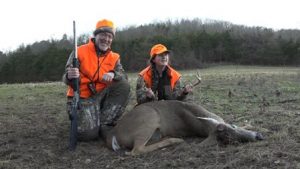
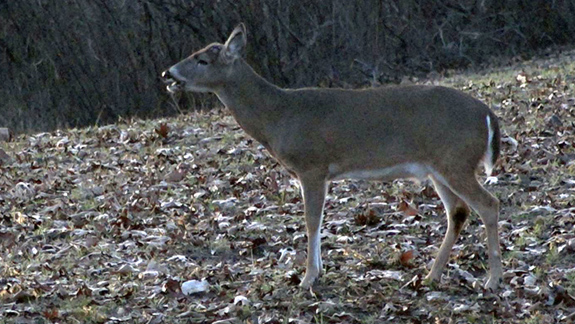
This doe was traveling from a food source to a bedding area during a late season hunt.
Not every property is laid out like the one I hunt back home but the same basic principles lead to successful hunting tactics. We use these exact hunting strategies at The Proving Grounds. Understanding how deer move on a property in relation to food sources, cover, and water is the biggest key to hunting the entire season – especially during the late season.
During the late season, quality cover and food become extremely important. Deer need energy to get through the lean periods of winter. Often by the late season, deer have been pressured by hunters and hungry predators and are seeking the best cover available. That is when finding the travel corridors become critical to late season success. Deer are often on their feet during daylight hours traveling to and from these two sources.
If you still have a few days or weeks left of season, you may consider honing in on how deer are moving from cover and food. If your season has already ended, it is a great time to get into the woods and begin scouting for next year. Deer sign is often easy to read this time of the year and can pay off in years to come.
Pro-Staffer Seth Harker has been chasing a buck with out of this world brow tines. Seth called the buck E.T., extra terrestrial, because he’d never seen a buck near his place with such long brow tines. He hunted E.T. all season and kept shifting strategies. Finally, during the late season E.T. was back. Watch this epic hunt to see Seth’s strategy!
If you are trapping to help balance predator numbers read the blog at this link! Over the years we have found several tricks that can help you become more efficient with your time.



 Short Clip:

 Tip of the Week: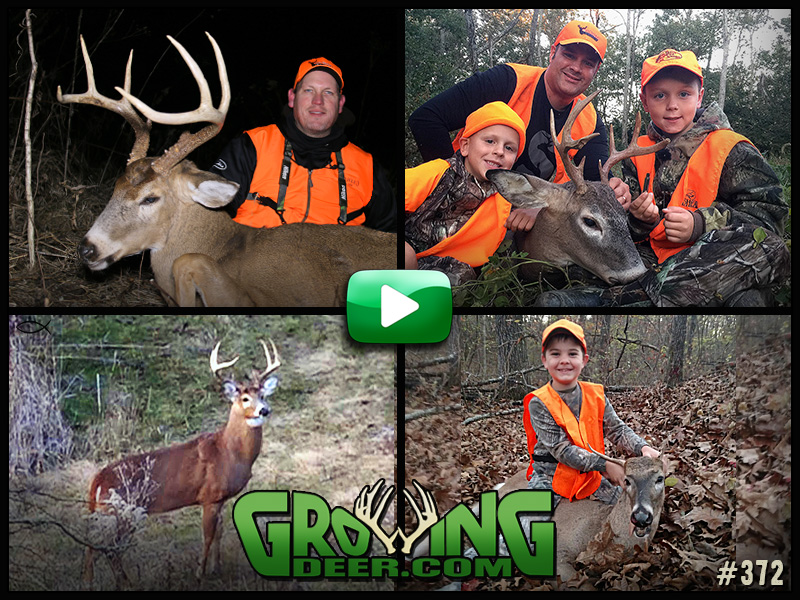
 Tip of the Week: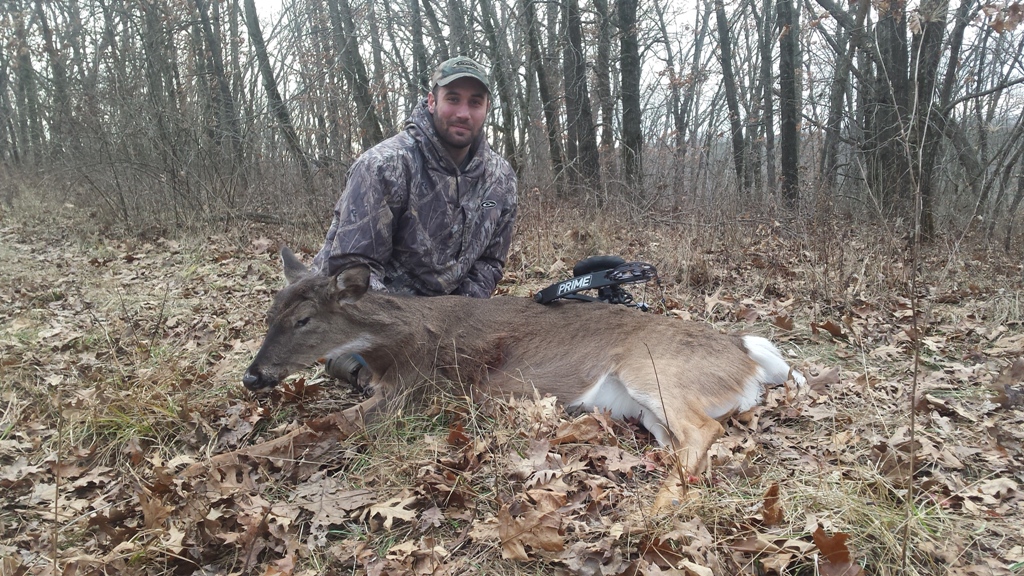
 Tip of the Week: